Voice and Tone
If voice is who we are and tone is how we show up in a given moment, then messaging is what we choose to emphasize. The right messaging connects what’s important to the reader with how we can support them.
Challenger Messaging Framework
The challenger messaging framework is how we verbally express our brand positioning. We lead with one of the four macro barriers that stand between investors and their goals—distortion, dependency, distraction, and delay—and follow up with how Morningstar uniquely addresses it.
By connecting our communications to a barrier and its corresponding brand pillar—transparency, independence, long-term focus, and progress—we show investors that we understand their experience and are equipped to challenge those barriers. Using the barriers as a framework can make our writing more relevant, distinctive, and memorable.
What the framework does
- Shows readers we understand their experience, not just our product
- Gets to the point faster by leading with what readers care most about
- Helps prioritize and structure messages while centering the reader’s needs
- Projects confidence; the messaging doesn’t hedge or over-explain
- Keeps our writing fresh; we’re not recycling the same boilerplate language to talk about who we are and what we stand for
What the framework isn’t
Challenger messaging isn’t an extension of voice and tone; it’s a separate layer that helps frame the problems we solve. It isn’t something applied to every piece of writing. It works best when it sharpens the message and fits with the appropriate tone. If it makes the message longer or more complicated, remove it.
Usage
When to use
The framework works best when writing for an external audience, particularly when reflecting their experience builds trust in the brand: marketing and sales materials, research communications, key moments in a campaign, headlines, value propositions, or shareholder letters. It’s especially helpful in writing intended to persuade or promote rather than instruct.
In more functional messaging—such as transactional emails, internal newsletters, or onboarding—a more indirect application of the framework could help focus the message or inspire readers to take action. Choose what’s most appropriate for your situation.
When to avoid
- Legal copy, disclaimers, or anything with specific compliance or regulatory requirements
- UI copy and instructions, where the goal is to get someone from point A to point B without friction
- Any context where the framework makes it harder for readers to get to the point quickly, like character-constrained messages
- Situations where it would appear in most or all touchpoints of an experience and feel repetitive
Application
The framework isn’t one-size-fits-all. How directly you write about a pain point depends on the context, the audience, and the tone of the moment.
Indirect: The writing sounds conversational or confident, depending on the context, without being confrontational or brash. It centers the reader’s need or a benefit, but may not name the barrier outright.
Direct: The writing is crisp, unflinching, and meets the problem head-on early in the message.
Distortion
Distortion refers to moments when key information is opaque, incomplete, or hidden. When your writing addresses this barrier, it signals to readers that they can bridge the gap between what they’ve been shown and what they actually need to know. Topics might include lack of transparency in third-party data or conflicts of interest in investment insights.
Relevant terms to use in copy: opaque, hidden, misleading, misrepresented, blind spots, incomplete, black box, masked, obscured, undisclosed, unreported

Before This social post leads with an enthusiastic announcement instead of the reader’s experience. The message hints at the benefit, but doesn’t name the problem the integration tries to solve.
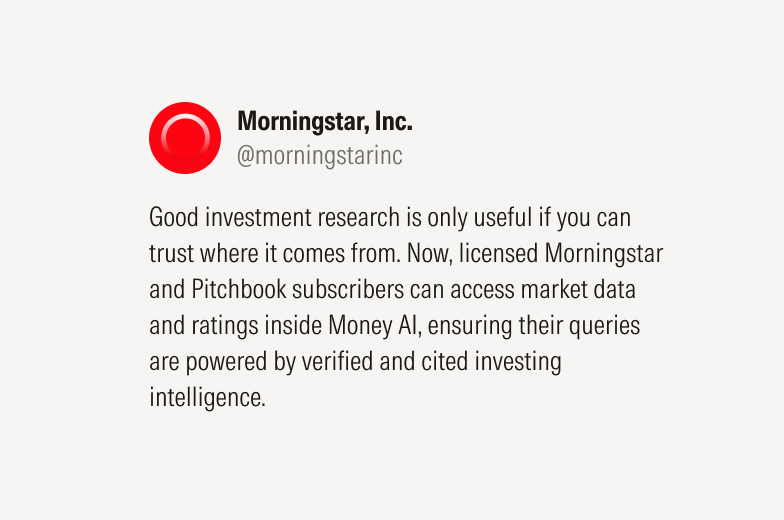
After: Indirect This version subtly introduces the pain point—whether AI output can be trusted—in a conversational way. It underscores the idea of trust by using “verified” and “cited” later in the post.
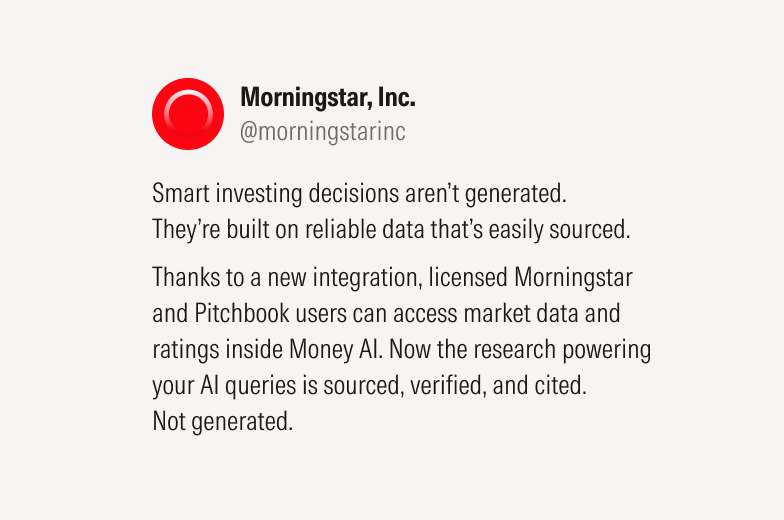
After: Direct The opening assumes the reader is well aware of the lack of transparency in AI-generated research. It succinctly and confidently explains the integration without getting lost in the details.
Dependency
Dependency refers to situations where access, information, or decision-making is overly controlled by a few players. When your writing addresses this barrier, it calls out that unfair power dynamic and positions the reader as someone who can regain control. Topics might include limited access to private markets/niche asset classes or regulatory complexity.
Relevant terms to use in copy: concentrated, crowded, overreliance, gatekeepers, intermediaries, limited access, inaccessible, dominant players, bottleneck
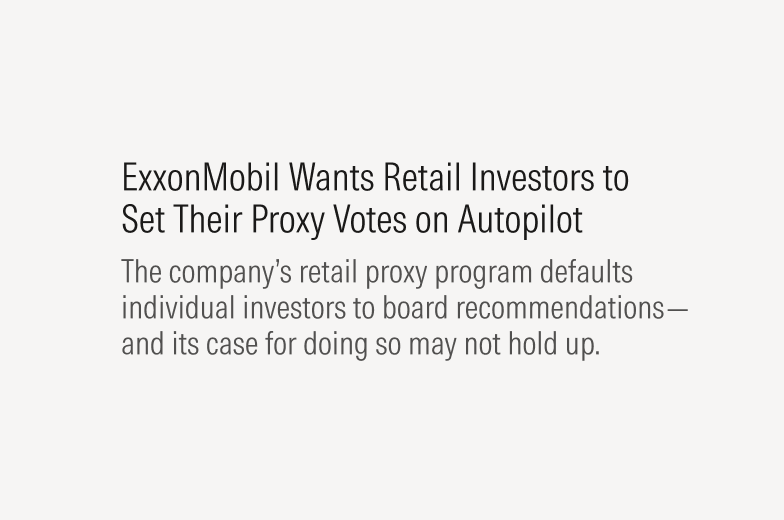
Before This headline reads like a neutral, journalistic one, and the pain point isn’t immediately clear to the reader. The subheadline elaborates but lacks a strong perspective and doesn’t name what’s at stake for investors.

After: Indirect When framed as a question, this headline scrutinizes without naming the pain point outright. The subheadline sounds more confident without hedging language, letting the reader connect the dots.
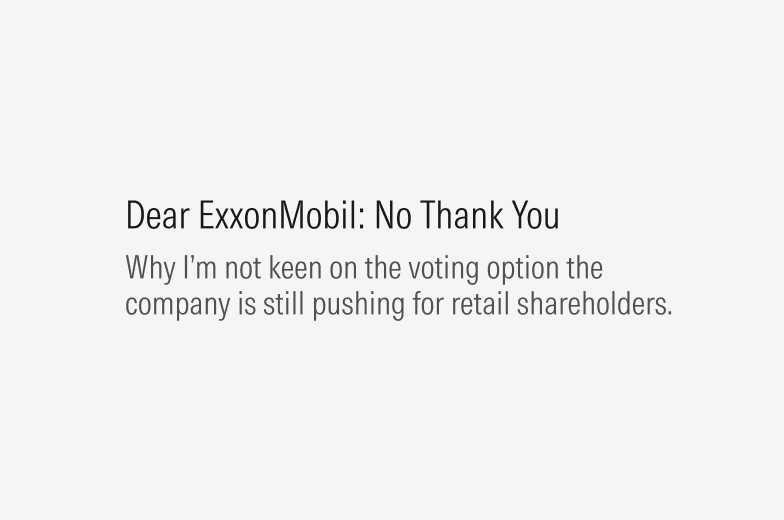
After: Direct This headline directly and defiantly confronts the power dynamic at play, showing we’re on the investor’s side. The subheadline supports it with stronger language like "pushing" over "recommending."
Distraction
Distraction refers to short-term noise—hype cycles, sensational headlines, fleeting momentum—that pulls investors away from what genuinely matters for long-term outcomes. When your writing addresses this barrier, it directly challenges hype while redirecting readers toward the fundamentals. Topics might include technology investment hype or limited deep industry research.
Relevant terms to use in copy: noise, short-term, volatility, turbulent, information overload, uncertainty, confusion, hype, speculation, sentiment swings, headline-driven, chatter

Before This value proposition on a product page leads with features and tools instead of a pain point or benefit. Without a point of view, it looks like a value proposition that could be found on any financial services website.

After: Indirect Here, the headline frames the product around the reader’s experience before introducing a solution and key features, helping the reader understand how they benefit from them.
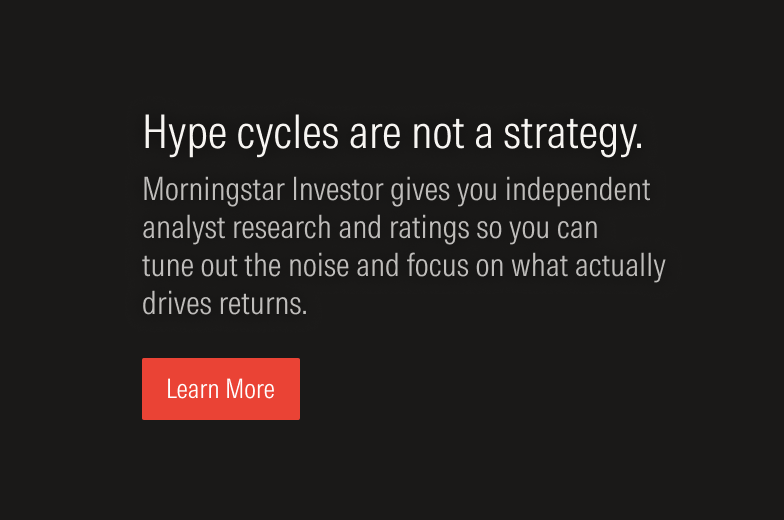
After: Direct This value prop boldly addresses the pain point. Rather than leading with features readers will see elsewhere in Morningstar touchpoints, it creates a compelling contrast between the reader’s experience and what we offer.
Delay
Delay refers to market inefficiencies, outdated workflows, operational friction, or disconnected datasets that hold investors back from acting quickly. When your writing addresses this barrier, it exposes the cost of that friction and what readers stand to gain when it’s removed. Topics might include poor tool integration or limited skills to leverage available data.
Relevant terms to use in copy: fragmented, latency, delayed, lagging, siloed, disconnected, bottleneck, non-standard, outdated, manual, legacy, slow, friction, inefficiency
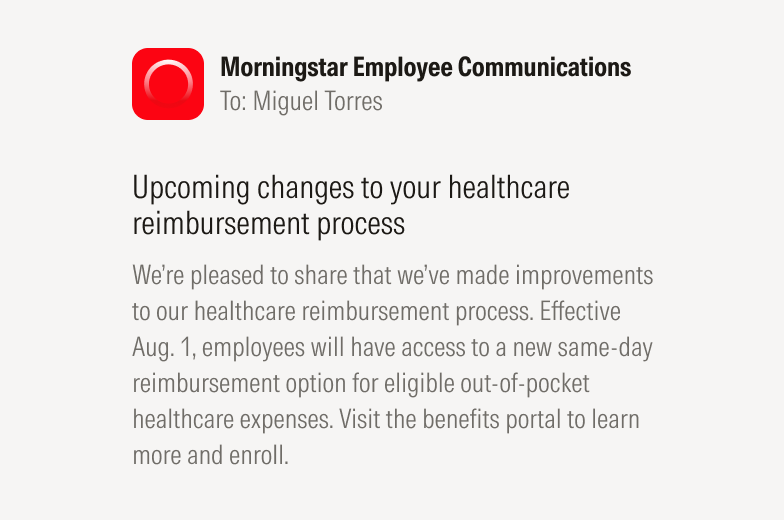
Before The subject line and opening sentence sound professional and neutral. Typical corporate niceties (“we’re pleased to share”) put the focus on the company’s actions rather than the reader’s needs.
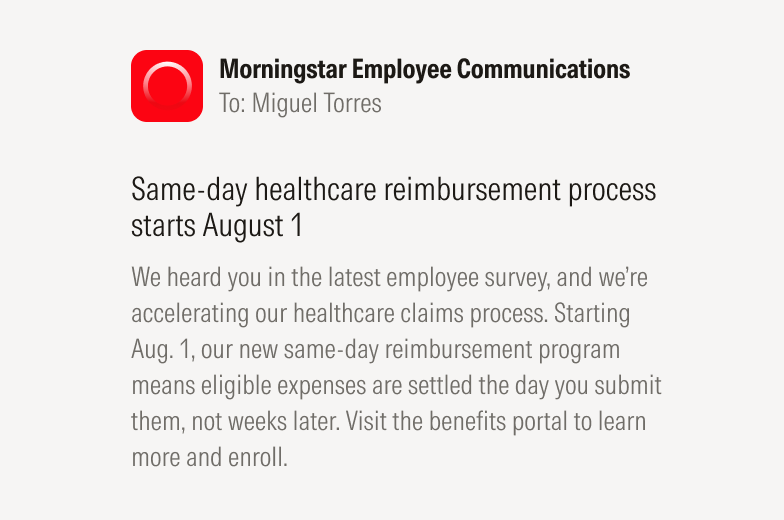
After: Indirect A more specific subject line speaks to the reader’s need. The opening grounds the improvement in a pain point without naming it outright. It’s underscored by the “day you submit”/“weeks later” contrast.
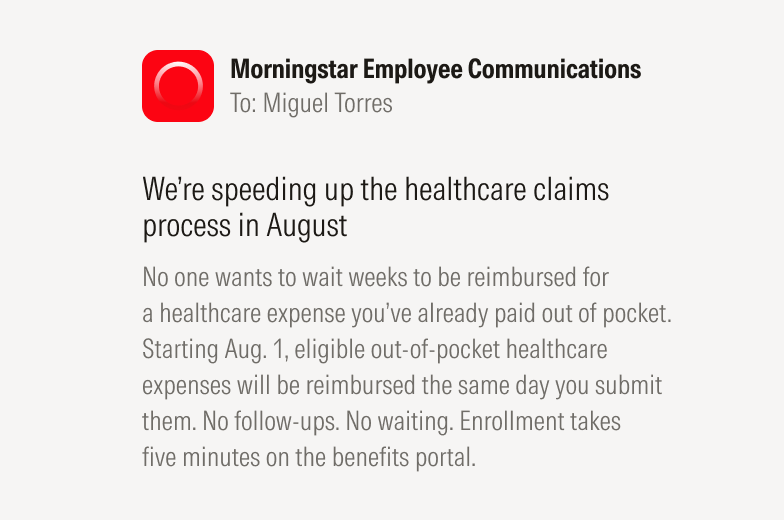
After: Direct The opening sentence confronts the delay pain point head-on from the employee’s perspective. The subject line cuts to the chase, enticing employees to click into the message.